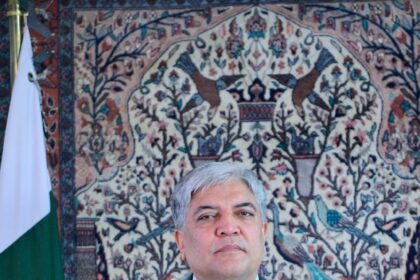

RASC News Agency: Jan Achakzai, former Information Minister of Pakistan’s Balochistan province, has sharply criticised what he describes as a “crisis of political leadership among Tajik elites of Afghanistan,” in a commentary published on his official X (formerly Twitter) account.
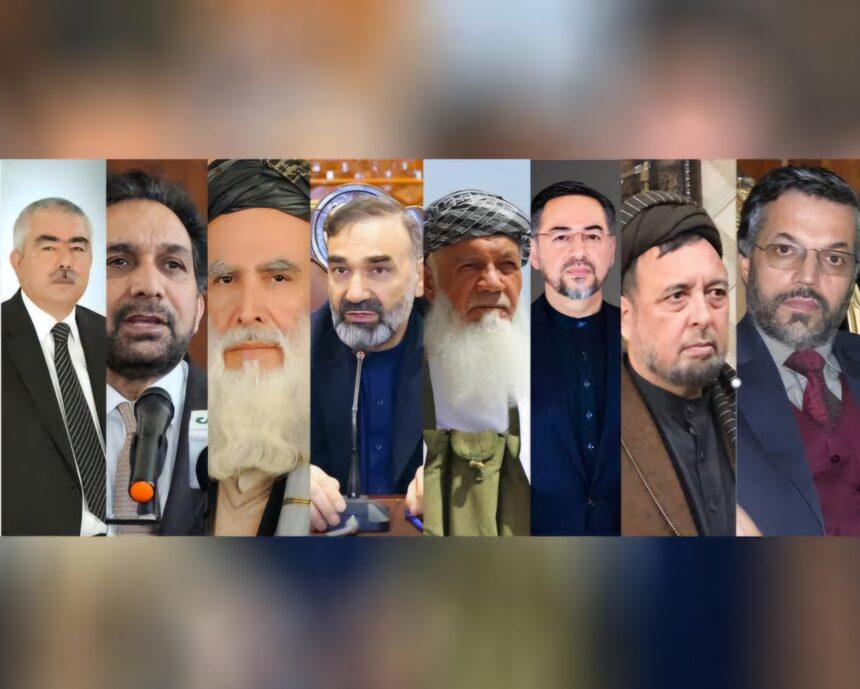
In his remarks, Achakzai refers to the reaction of a prominent Tajik figure living in exile to recent statements made by Anwar-ul-Haq Ahady, Afghanistan’s former finance minister. He argues that the Tajik figure attempted to portray Ahady’s views as “intellectually unfounded and politically irrational,” while, in Achakzai’s assessment, the response itself amounted less to critical analysis and more to a form of political self-deception.
Achakzai also challenges efforts by certain Tajik elites to present former President Hamid Karzai as a figure “transcending Pashtun ethnic boundaries.” He contends that such narratives collapse under serious historical and political scrutiny, and reflect a persistent tendency among segments of the Tajik political class to reinterpret Pashtun-centered power structures as inclusive or neutral.
According to Achakzai, a significant portion of today’s Tajik leadership has become deeply absorbed into what he terms “official Afghanism” a state-centric and Pashtun-dominated national identity framework. In his view, this has created a growing disconnect between these elites and the real political and social aspirations of Tajik society, particularly among younger generations.
He further argues that diplomatic positions, academic titles, or affiliations with international think tanks cannot conceal fundamental weaknesses in political positioning. Achakzai warns that this trajectory risks producing a generation of Tajik politicians who will be remembered more for political accommodation and symbolic representation than for clarity, courage, and principled advocacy of their community’s demands.
In another part of his analysis, Achakzai addresses the broader structure of power in Afghanistan. He maintains that large segments of Pashtun political elites, across ideological and factional lines, do not genuinely believe in transforming the underlying model of ethnic dominance. At the same time, he accuses many Tajik leaders of continuing to hope for a share of power within the existing system, without demonstrating either the capacity or the political will to fundamentally challenge it.
From Achakzai’s perspective, the continuation of this pattern carries serious long-term consequences for the political, social, and economic position of non-Pashtun communities in Afghanistan. He cautions that unless Tajik leaders develop a clear, coherent, and independent strategic vision, discussions of peace, stability, and social justice will remain largely rhetorical and disconnected from structural realities.
These statements come at a time when debates over national identity, ethnic power structures, and political representation remain among the most contested issues in Afghanistan’s intellectual and political landscape particularly within diaspora communities. The question of whether non-Pashtun elites are challenging or reproducing historical systems of domination has become central to contemporary Afghanistani political discourse.